Page 228 of 230

GM will threaten bankruptcy if it doesn’t get more aid

2009-cadillac-cts-x09ca_ct028-united-states

The auto bailout helped to keep GM and Chrysler on life support, but GM will make it clear in it’s plan to be filed this week with the government that more money will be needed in order to avert bankruptcy.

General Motors Corp. will offer the government the choice of giving it billions more in bailout money or seeing it file for bankruptcy when it presents a restructuring plan next week, according to a report published Saturday.

The online edition of The Wall Street Journal, citing unnamed sources, said the competing choices present a dilemma for the Obama administration, which may fear seeing the industrial icon carmaker fall into bankruptcy and cut more jobs if it’s refused more aid.

The government has already committed $13.4 billion to GM as part of a federally-funded bailout. The automaker is expected to include its call for more funds in a restructuring plan it’s required to submit to the Treasury Department by Tuesday, though the company isn’t expected to include a dollar amount, according to the Wall Street Journal report.

However, Treasury Department officials believe GM needs at least $5 billion more in loans to keep operating beyond the first quarter, according to the report.

The key will be the plan laid out by GM. Will it have real concessions from bondholders and the union?
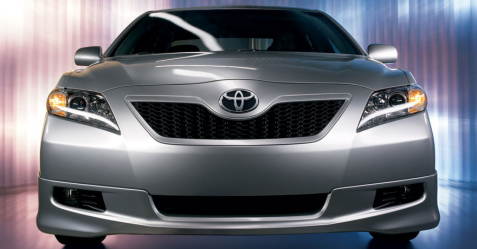
Toyota to cut North American production

2009_camry_se_1

Things are getting bad for everyone. Toyota Motor Corp. said it is facing “the worst automotive slump in decades.” As a result, Toyota will reduce production at its North American manufacturing plants and offer buyouts to employees.

Toyota said it will take steps including cutting production days in April, reducing paid hours for workers, eliminating executive “and salaried” bonuses, cutting executive pay and offering a “voluntary exit” to employees “who wish to pursue other opportunities.”

North America is Toyota’s largest market, where it sold 521,000 vehicles in the October-December quarter, compared with 465,000 in its next-biggest market, Japan.

As per its latest forecast, Toyota expects North American sales to drop to 2.07 million units during the current financial year ending March 31, from 2.96 million units in the previous financial year. Sales are also expected to drop in its home market to 1.94 million units this fiscal year from 2.19 million.
Toyota also said it sees “no wage increases for the foreseeable future.”

Toyota Motor Engineering & Manufacturing North America Inc., which employs roughly 25,000 workers, is offering all of them 10 weeks of pay, two weeks of additional pay for every year of service and $20,000 to leave the company, according to a report in the online edition of The Wall Street Journal.

Mike Goss, a Toyota spokesman, was quoted by the report as saying the company doesn’t expect a significant number of workers to take the offer and that it didn’t have any target for the “voluntary exit program.”

Honda’s Hydrogen Powered Sports Car

Cool stuff.

Honda has made quite a splash with its new concept car revealed at the LA Auto Show.

When it comes to green motoring, the Toyota Prius might well be a desirable road-bound alternative to regular petrol guzzlers, but it hardly sells its ecological worth alongside drool-worthy automotive sex appeal – which is where Honda’s new environmentally-friendly supercar screeches into view.

Currently only in the concept stage, which suggests it might never make the leap into mass production, Honda’s recently unveiled FC Sport Design Study couples sleek aesthetics with the promise of environmental consideration thanks to the inclusion of zero-emission engineering.

The Japanese manufacturer used this year’s Los Angeles Auto Show to roll out its ambitious hydrogen-powered three seater, which builds on the V Flow fuel cell (FC) technology already available to eco-conscious Honda drivers via the existing FCX Clarity.

Bondholders starting to squeeze GM

The Detroit News is reporting the GM bondholers are driving a hard bargain and threatening to push GM into bankruptcy.

General Motors Corp. bondholders want more money in exchange for forgiving billions in debt and are threatening to push the struggling automaker into bankruptcy if they don’t get it, The Detroit News has learned.

GM has been negotiating with bondholders this week on a complicated debt exchange that would cut the automaker’s unsecured debt by two-thirds to $9.2 billion. To get there, bondholders would have to accept about 30 cents on the dollar, which is a requirement of the automaker’s $13.4 billion federal loan package.

But bondholders are demanding 50 cents on the dollar, which they say mirrors the value of concessions being negotiated with the United Auto Workers, said people familiar with the talks.

The demands illustrate the challenges GM is facing in its talks with bondholders and raise doubts about whether the company will succeed in cutting its debt and convincing the government it can repay the loans. If GM cannot reach a deal on concessions with bondholders, as well as with the UAW, the government could recall the $9.4 billion GM has already received and effectively force the automaker into bankruptcy.

Top Ten Mustangs?

It’s hard to imagine any Top 10 list that includes the Mustang II, but here it is on MSN’s new list of Mustang Mania.

1974 Mustang II
Today, this vehicle is universally detested by Mustang enthusiasts. As a performance car, it was a thorough disappointment. But then, the mid-’70s was an era of fuel shortages, vapid disco music and cars gone sad because manufacturers were struggling to meet new emission regulations. Therefore, the Mustang II was designed to be light, approachable and relatively fuel-efficient. The formula worked, at least at first; the 1974 model sold more than 322,000 copies — good enough for fourth on the Mustang annual sales chart. More importantly, the Mustang II was good enough to keep the Mustang brand alive during a dismal period in America’s automotive history.

A couple of points should be clarified. First, disco didn’t become the rage till Saturday Night Fever hit in 1977. As for the lack of power, that was true, though I had one of these cars, and the previous owner had dropped a much more powerful engine in the vehicle, so that Mustang rocked. It was also bright red, so it looked much better than the ugly version shown above.

That said, the feature has some great photos of classic Mustangs, so check it out.

« Older posts Newer posts »

© 2026 Dashboard News

Theme by Anders NorenUp ↑